What Is STEM Education and How Does Drone Football Relate to It?
STEM education is a teaching approach that connects four areas:
🧪 S – Science – natural sciences
💻 T – Technology – technology
⚙️ E – Engineering – engineering
📐 M – Mathematics – mathematics
The essence of STEM is not to teach these areas separately, but to allow students to experience how they are connected through real problems, practical situations and collaborative tasks.
What is the goal of STEM education?
The goal of STEM education is not only to provide students with theoretical knowledge, but also to teach them how to apply it in practice.
It develops, among other things:
- problem-solving skills,
- creativity,
- practical skills,
- teamwork and communication,
- critical thinking,
- and the conscious use of technological tools.
The emphasis is on experimentation, design, testing and improvement. In other words, on the process that is also used in engineering and technology work on a daily basis.
Why is a drone a good tool for this?
Drone technology is both spectacular and complex. Within a single functioning device, physics, electronics, mechanics, power supply and remote control all come together.
This means that students not only see that a drone flies, but can gradually understand:
- what keeps it in the air,
- how it changes direction,
- how the motors and propellers work together,
- what role the battery plays,
- how the drone responds to the pilot's commands,
- and what to do when something does not work properly.
Appropriate educational programmes can also incorporate additional technological elements, such as sensors or programmable systems.
How does drone football support STEM education?
Drone football is particularly well suited to developing STEM thinking because it combines technological learning with gameplay and teamwork.
Participants do not simply become familiar with the drone, but also use it, control it, maintain it and repair it when problems occur.
🧪 Science
During drone football, students encounter many physical phenomena directly:
- lift,
- gravity,
- acceleration and deceleration,
- momentum,
- air resistance,
- balance and stability.
These do not remain abstract concepts. The pilot can immediately see what happens when they turn too quickly, brake too late, approach the goal at the wrong angle, or need to stabilise the drone again after a collision.
💻 Technology
While using a drone ball, students can become familiar with the main technological components of the device:
- motors,
- electronic control unit,
- battery,
- remote controller,
- lights and other electronic components.
Here, technology is not an "invisible background", but a system whose operation participants experience directly.
⚙️ Engineering Thinking
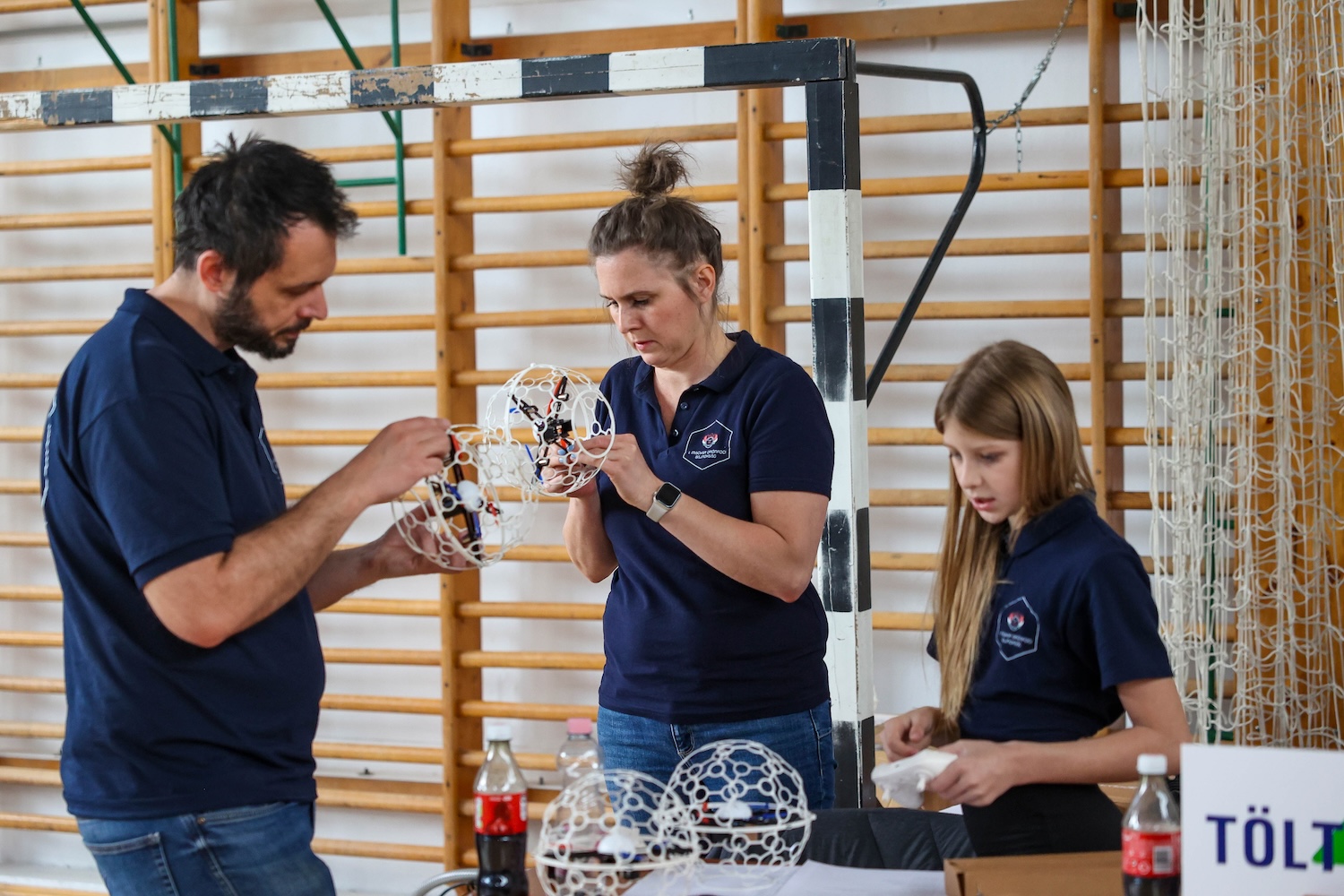
One of the most interesting educational opportunities offered by drone football is that participants can not only use the equipment, but in certain programmes they can also assemble it themselves.
During DIY sessions, students can become familiar with the main components of the drone, assemble a functioning drone ball and then test it.
This process is very close to engineering work:
design → assembly → testing → identifying a fault → repair → retesting
The drones used in drone football competitions can also be repaired, so an accident or technical problem can itself become a learning opportunity.
📐 Mathematics
Mathematics is constantly present in drone football, even when the player is not actually writing down formulas.
For example, sessions can examine:
- distance,
- speed,
- time,
- angle,
- direction,
- trajectory,
- spatial position,
- ratios.
During the game, the pilot is constantly estimating and making decisions: at what speed should they approach, at what angle should they turn, how long will it take to reach the goal, or how should they avoid the defender?
The "hidden curriculum" of drone football
In addition to the STEM areas, drone football also develops skills that are not linked to a single subject.
These include:
- teamwork,
- communication,
- attention and concentration,
- strategic thinking,
- quick decision-making,
- problem-solving,
- self-confidence,
- and the ability to handle success and failure.
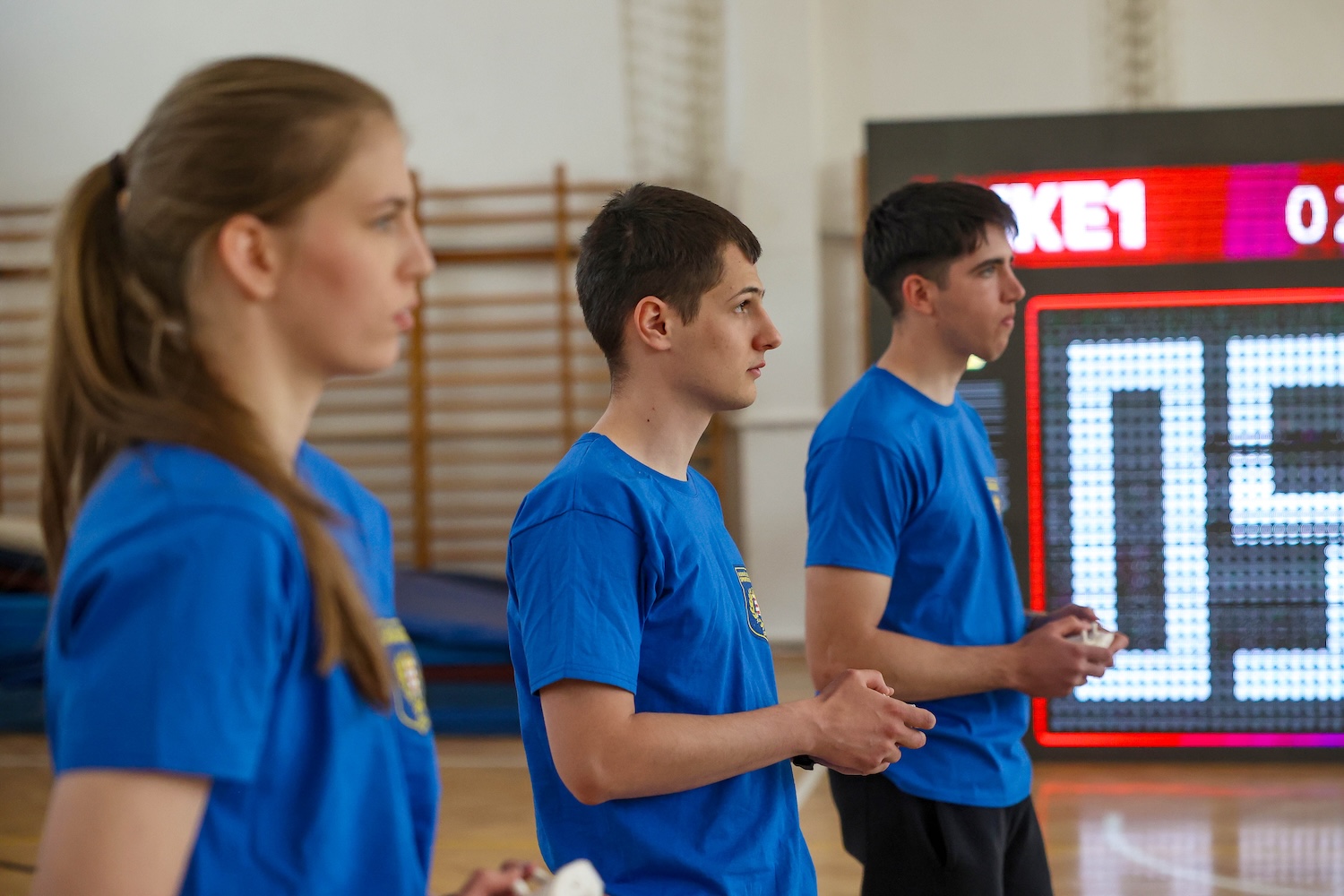
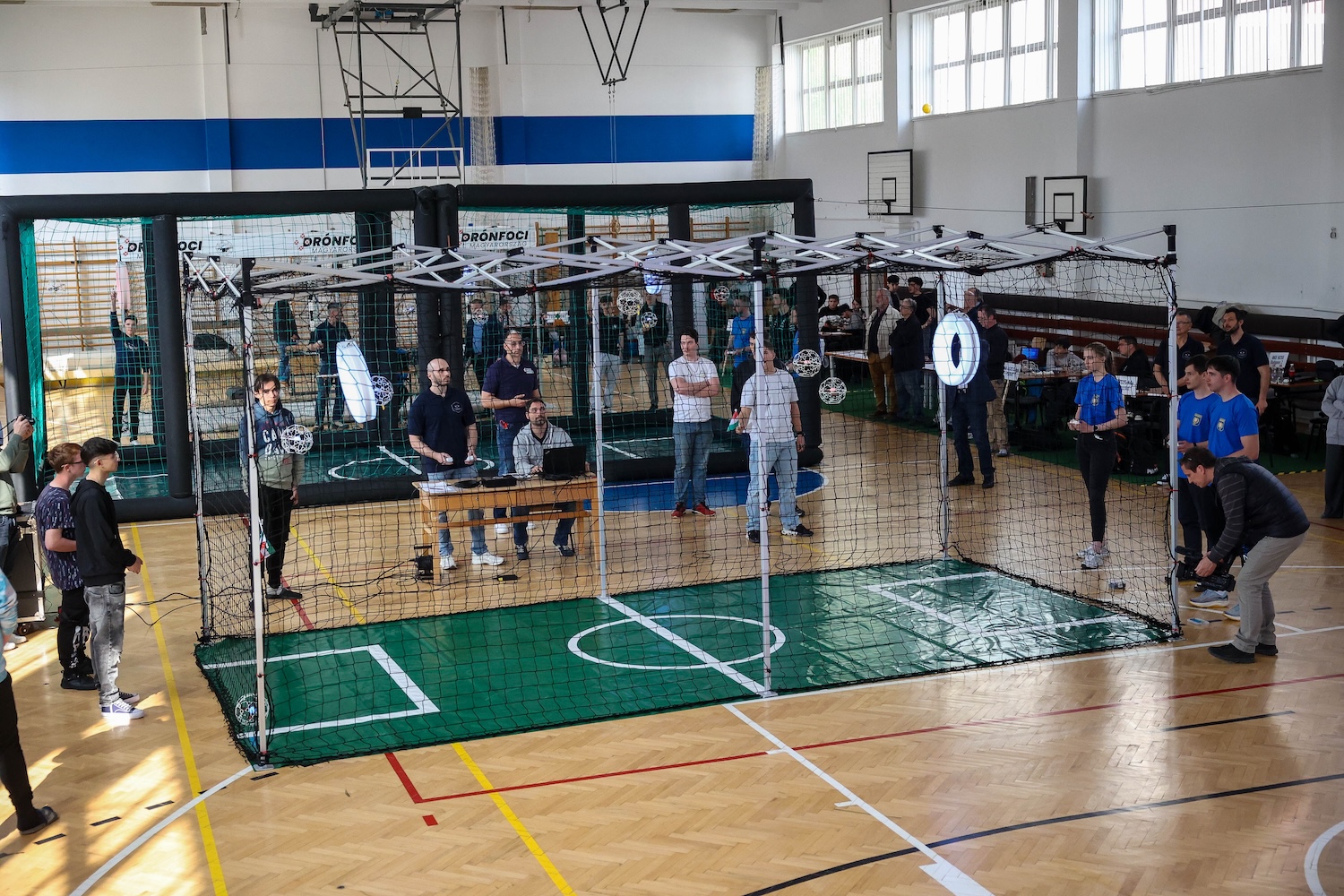
During a match, players must constantly work together. The role of the attacker differs from that of the defenders, yet they work towards the same goal.
Experiential Learning
The strength of drone football lies in the fact that technical learning is connected to an immediate hands-on experience.
The participant:
learns → assembles → tests → controls → looks for faults → repairs → uses it again
For many students, this process can be more motivating than encountering the same concepts exclusively in theoretical form.
The goal is not simply for someone to learn how to fly a drone. Rather, it is to understand how the technology works, gain the confidence to experiment, solve problems and work as part of a team.
Where can drone football be used for educational purposes?
Drone football can be integrated into a variety of educational environments:
- school STEM programmes,
- extracurricular clubs,
- career orientation sessions,
- technology workshops,
- educational camps,
- team-building programmes,
- or as an independent drone football activity.
At the Drone Football Innovation Centre, participants can also explore the technology, the game system and the individual equipment in person. During DIY sessions, participants can follow the operation of a drone ball from assembly all the way to flight.
More Than a Game
At first glance, drone football is a spectacular technology-based sport. From an educational perspective, however, it offers much more.
It combines physics, technology, engineering thinking and mathematics, while encouraging cooperation, creativity and problem-solving.
For this reason, drone football can be more than just a new sport for schools and communities. It can also be an experiential educational tool through which STEM fields become tangible and engaging.